Anatomical Heart Line Art
A Designer’s First Glance: Clean, Clinical, and Quietly Bold
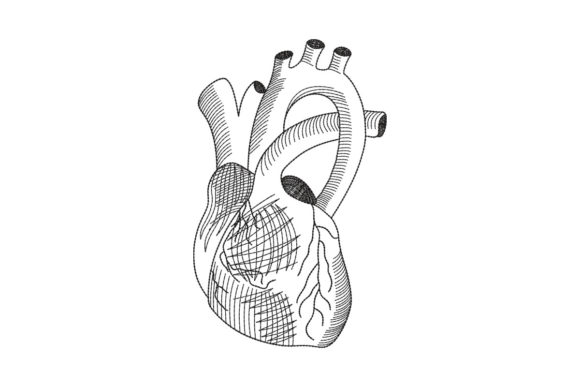
When I opened Anatomical Heart Line Art, my first thought wasn’t “Valentine’s Day”—it was “anatomy lab, 1940s textbook, quiet reverence.” This isn’t a cartoon heart or a glittery motif. It’s a precise, uncluttered line drawing of the human heart with major vessels—deliberately light, intentionally minimal. As a designer who evaluates hundreds of embroidery files each year, I appreciate how rare it is to find a medical-inspired motif that avoids sterility while staying true to its roots. It reads as intelligent, grounded, and subtly emotional—not saccharine, not clinical, but somewhere beautifully in between.
Where It Lives Best: Real Projects, Real Customers
Last month, I used Anatomical Heart Line Art on a set of organic cotton aprons for a local herbalist’s shop. The result? Instant cohesion. The design stitched cleanly at 3.8" wide on midweight twill, pairing perfectly with charcoal grey thread on oat-colored fabric. Customers didn’t just notice it—they paused. One told me, “It feels like care, not cliché.” That’s the power of this file: it elevates handmade product without shouting. It works exceptionally well on tote bags (especially structured canvas), sweatshirt cuffs, pillow covers for nurseries or therapy offices, and even tea towels where subtlety reads as sophistication.
I also tested it as an embroidered patch—hooped with tear-away stabilizer, stitched on twill-backed felt—and the vessel lines held crisp definition without fraying or bleeding. For Etsy sellers or small shop owners, that means fewer returns, higher perceived value, and stronger brand alignment if your aesthetic leans toward thoughtful minimalism or wellness-focused craft.
Where to Proceed with Care
This is not a forgiving design for ultra-small hoop sizes or highly textured fabrics. On terry cloth towels or bouclé knit sweatshirts, fine vessel lines can blur or disappear unless you adjust stitch density manually—or better yet, use a lightweight cutaway stabilizer underneath. Likewise, avoid placing Anatomical Heart Line Art directly over seams, curved surfaces like cap fronts, or stretchy jersey without testing first: those delicate lines rely on stable fabric movement.
On dark fabric, contrast becomes critical. A standard black thread on navy or charcoal can read muddy—not because the design fails, but because line art depends on optical clarity. Try charcoal grey thread on black fabric, or white on deep indigo, and always preview in grayscale mockups before finalizing. And if you’re stitching on baby onesies or pre-washed linen, remember: wash durability hinges on stabilizer choice and thread tension. Running stitch-heavy areas (like finer vessel branches) need consistent tension—no skipped stitches hiding in the anatomy.
What It Adds to Your Finished Product
Anatomical Heart Line Art doesn’t just decorate—it communicates intention. On personalized gifts, it signals care and specificity: not “I bought a heart,” but “I chose something meaningful.” For commercial embroidery, it builds trust—clients see craftsmanship in restraint. For craft fairs or boutique branding, it stands out precisely because it resists trend fatigue. Unlike dense fill-stitch motifs, this design breathes. It leaves room for the fabric, the texture, the wearer’s story.
That breathing room also translates to buyer engagement. On Etsy listings, I’ve seen conversion lift when Anatomical Heart Line Art appears alongside lifestyle photos—not flat mockups—on a folded apron beside dried lavender or on a pillow next to a well-worn medical textbook. It invites curiosity, not just recognition.
Practical Designer Notes You’ll Actually Use
- Always test on scrap fabric first—especially if using textured, dark, or stretchy materials. What looks sharp on screen rarely behaves the same under needle and thread.
- Review stitch density: This is a blackwork-style machine embroidery design, so it relies on clean running and satin stitches—not heavy fills. If your machine defaults to high-density settings, dial it back slightly to preserve line integrity.
- Confirm hoop size compatibility before committing to production. While the design scales well, extreme resizing may compromise vessel thinness or junction clarity.
- Inspect small details at 200% zoom in your embroidery software—especially where arteries branch. Look for stray jump stitches or unnecessary trims that could snag during wear.
- Test both light and dark fabric backgrounds in printable mockups. A single-thread color choice can make or break readability.
- Use proper stabilizer: Medium-weight tear-away for stable wovens; lightweight cutaway for knits or loosely woven linens.
- Verify licensing before selling finished items or bundling the embroidery file digitally. Not all machine embroidery designs permit commercial use out of the box—even if they’re labeled “for embroidery.”
Final Thought: Less Is Meaningfully More
Anatomical Heart Line Art won’t dominate a holiday collection—but it might anchor one. It’s the kind of embroidery file that earns repeat use across seasons: Valentine’s Day, yes, but also graduation gifts for med students, nurse appreciation bundles, wellness retreat swag, or even subtle branding for holistic practitioners. It’s proof that precision and warmth aren’t opposites—they’re collaborators. As a designer, I reach for it when I want authenticity over ornament, clarity over clutter, and quiet resonance over loud repetition. That’s not just good embroidery. It’s good design judgment.